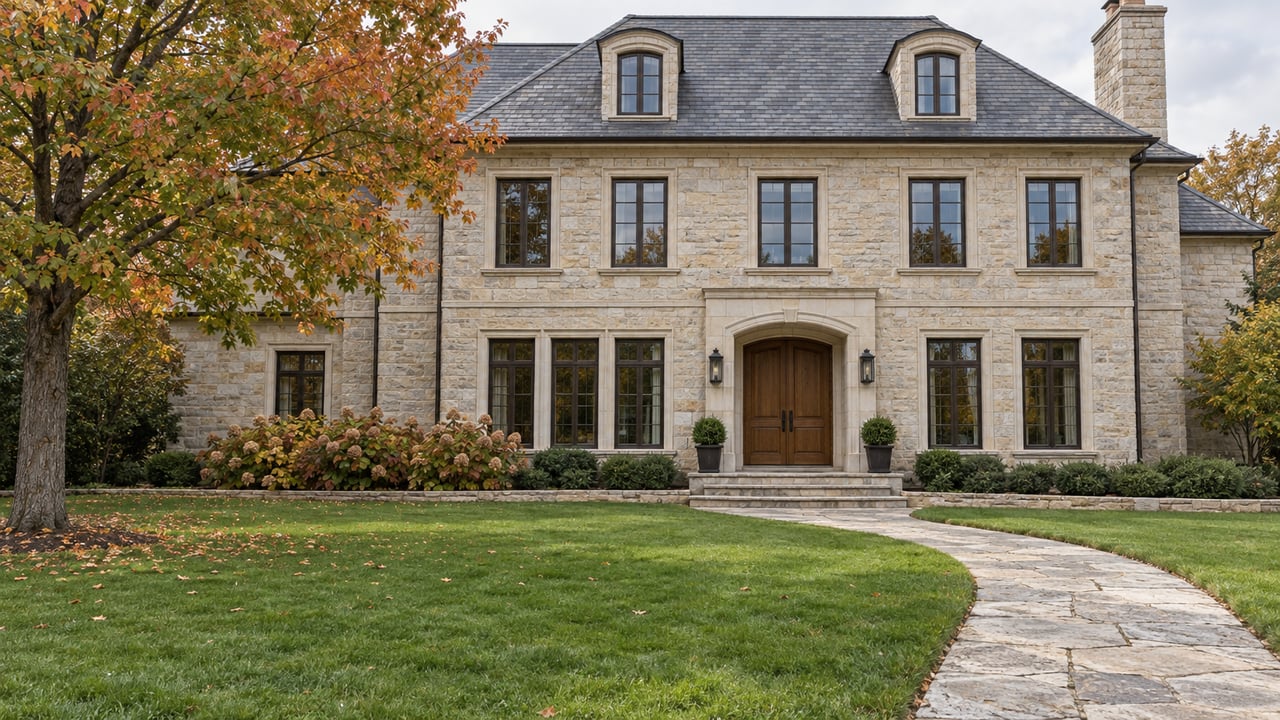

Picture two homes priced at exactly $1.8 million. One sits on a quiet street in Vinings, close enough to hear the Chattahoochee. The other sits in Buckhead, a few miles east on the other side of the river. Same price. Same size, roughly. Which one costs more to own?
The honest answer has almost nothing to do with either house. It has to do with which county line the lot falls on, and whether that lot happens to sit inside a city.
How the Tax Layers Compare
Vinings has never been its own city. It is a 3.3-square-mile unincorporated community in Cobb County, bounded by the Chattahoochee River, I-285, Cumberland, and Smyrna, and it has stayed that way since it was first recognized as a distinct place in 1904. No mayor, no city council, no municipal government layered on top of the county. That absence turns out to matter more than most buyers expect once the tax bill arrives.
Buckhead sits inside the City of Atlanta. That means a Buckhead property tax bill carries a layer Vinings simply does not have.
Here is how the two stacks actually compare for 2026:
| Taxing layer | Vinings (unincorporated Cobb) | Buckhead (City of Atlanta) |
|---|---|---|
| County general fund | 8.46 mills | 8.87 mills |
| Fire | 2.97 mills | Included in county/city services |
| School district | 18.70 mills (Cobb County Schools) | Separate Atlanta Public Schools millage |
| City | None | Roughly 8 to 10 mills |
| Combined total | 30.13 mills | Roughly 43 to 46 mills |
The Cobb County Board of Commissioners kept its 2026 general fund rate at 8.46 mills, fire at 2.97 mills, following its final public hearing on July 28, 2026, which means the 30.13 total for unincorporated addresses like Vinings held steady into this tax year. Fulton County's commissioners did the same on their end: Chair Robb Pitts's budget, passed 4-3 on January 21, 2026, kept the county's general fund at 8.87 mills rather than the 9.26 mills county staff had floated. That county rate has now held for five straight years. The Buckhead total reflects its county rate, the City of Atlanta's own levy, and the Atlanta Public Schools millage, which funds a separate school system from the one serving Vinings.
What Thirteen to Sixteen Mills Actually Means Each Year
A mill sounds abstract until you run it against an actual price. The Georgia Department of Revenue says real property is assessed at 40 percent of fair market value, so a $1.5 million home carries an assessed value of $600,000 before any exemption. Apply a 13 to 16 mill gap to that assessed value and the difference lands somewhere between $7,800 and $9,600 a year, purely from the taxing layer, before either owner has filed a single exemption.
Move up to a $2.5 million home, and the same math produces a gap of roughly $13,000 to $16,000 a year.
The difference recurs every year for as long as you own the home, and it has nothing to do with the property itself. A buyer weighing a Vinings estate against a similarly priced Buckhead property is really weighing two different governance structures, and only one of them shows up anywhere on a listing sheet.
The Two Markets Aren't Quite the Same Shelf
None of this means the two markets are interchangeable substitutes for the same money. Vinings' inventory runs from townhomes near $400,000 up to riverfront and custom estates approaching $2.5 million, and the community's median sold price stood at $665,000 in early 2025, up 23.5 percent year over year. Buckhead's northwest submarket, covering the 30305 and 30327 zip codes, carried a trailing 12-month single-family median closer to $2.68 million, with entry-level luxury starting around $1.4 million in neighborhoods like Peachtree Heights. The 30327 zip code alone carries the highest average home value of any zip code in Atlanta.
Buckhead's premium reflects genuine scarcity. Tuxedo Park and the West Paces Ferry corridor have a fixed number of lots, and that number is not growing. A buyer paying more for a Buckhead address isn't only paying for square footage. They're paying for a piece of an enclave that cannot be replicated at scale, which is a different kind of value than a lower carrying cost. The tax gap is real, but it's one variable in a decision that also includes appreciation history, lot scarcity, and the kind of long-term positioning that matters to anyone thinking about resale a decade out.
Two Counties, Two Exemptions, Same Blind Spot
There's a reason Cobb opted out of Georgia's newer statewide floating homestead exemption, known as HB 581: as the Tax Foundation reports, Cobb already had its own version. Cobb County says its existing floating homestead exemption provides a greater benefit to taxpayers. JVM Lending reports that Fulton and the City of Atlanta run similar local caps of their own, limiting how fast a homesteaded owner's taxable value can climb even as market values rise.
None of that touches the structural gap between Vinings and Buckhead, though. Exemptions cap how fast your assessed value grows year over year once you've filed a homestead. They don't erase the millage stack itself. A homesteaded Vinings owner and a homesteaded Buckhead owner both get some protection against runaway reassessment, but the Buckhead owner is still applying that protection against a base rate roughly 13 to 16 mills higher.
One more thing worth watching if you're planning past this year: Ownwell reports that Georgia's HOME Act, signed by Governor Kemp on May 11, 2026, makes the inflation-rate assessment cap mandatory statewide starting in 2027, ending the local opt-out entirely. That will standardize how fast assessed values can grow almost everywhere in the state. It will not touch which addresses sit inside a city and which don't, so the core Vinings-versus-Buckhead gap described here is likely to outlast that reform.
What This Means If You're Actually Comparing the Two
If you're deciding between a Vinings property and a Buckhead property, the sale price on the listing sheet is only half the number you need. Ask for the seller's most recent actual tax bill, not a portal's automated estimate, and confirm whether a homestead exemption is currently in place, since Georgia Title & Escrow Company explains that it does not transfer to a new owner. And if you're looking at other parts of Cobb County, confirm incorporation status specifically. Vinings itself is unincorporated, but plenty of nearby addresses sit inside Marietta, Smyrna, Kennesaw, or Acworth, each of which layers its own city millage on top of the county rate, the same structural move Atlanta makes for Buckhead.
Does the tax bill reset when a home changes hands? Yes, in both counties. A new owner starts a new base year at the property's current fair market value, and the previous owner's exemption does not carry over.
Can a tax appeal close this gap? An appeal can lower your assessed value in either county, which shrinks the dollar difference proportionally, but it can't touch the millage rate itself. Georgia gives homeowners 45 days from the date on their Notice of Assessment to file.
Will the 2027 reform make the two counties equal? The mandatory inflation cap arriving in 2027 will standardize how fast assessed values can grow, but it doesn't remove city millage. The gap between an unincorporated Vinings address and a City of Atlanta address is likely to persist.
Whichever side of the river fits your life better, the decision deserves the full picture, not just the number on the listing. Debra Johnston has spent more than two decades reading exactly this kind of detail into Atlanta and North Georgia's luxury market, from Buckhead's established enclaves to the close-in communities across the Chattahoochee.
Let's Connect
If you're weighing a purchase across these two markets and want the full cost picture before you write an offer, reach out. It's worth understanding what you're actually signing up for, layer by layer.
This article is general information, not legal, tax or financial advice. Consult a qualified professional about your situation.